

Key Insights
- Ag loan demand is rising even as farm profitability continues to decline.
- CFIs should consider going beyond collateral and incorporating operational and weather data into underwriting.
- AI tools can assist in turning large volumes of farm data into actionable lending insights.
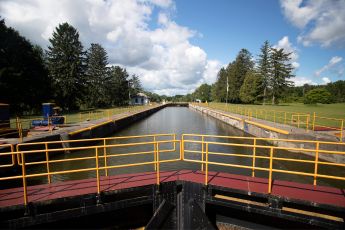
After more than two years of digging, the 363-mile Erie Canal from Albany to Buffalo, was opened on October 26, 1825. It didn't change the soil, the crops, or the people who farmed the land around it, but did change the flow of information, goods and opportunity. The Erie Canal connected producers to markets more efficiently and reshaped the economics of agriculture.
Today’s farm technology may be creating a similarly consequential connection linking day-to-day operations with data about production, costs, and cash flow. As agricultural borrowers adopt automated machinery, sensors and analytics, community financial institutions (CFI) have an opportunity to consider how these new signals can inform underwriting decisions.
Farming is no longer just about managing fields, planting seeds, harvesting crops and taking care of animals. In a world where data increasingly impacts just about everything, farms are no different. Farmers increasingly use automated machinery, sensors and real-time analytics to manage their operations. As a result, modern farms generate growing quantities of operational data that can affect both farm performance and the risks CFIs should consider in agricultural lending.
Growing Ag Lending Risks
As farm profitability weakens and borrowing costs remain elevated, CFIs should incorporate changing operating conditions, technology investments and available farm data into their lending decisions. According to data from the Center for Commercial Agriculture’s AG Economy Barometer, 21% of agricultural borrowers expect their 2026 operating loans to rise, up from 18% in 2025. Yet only 52% of borrowers were expected to turn a profit in 2025, with expectations that that number will fall below 50% in 2026.
While increased loan demand creates an opportunity for CFIs, organizations need to heighten their underwriting discipline and must understand how technological advancements can be used to manage rising credit risks. According to data from ProAG, more than 70% of agricultural lenders are grappling with deteriorating working capital among agricultural borrowers. Just looking at the valuation of collateral is no longer sufficient and CFIs should dig into the operations of individual borrowers to determine whether they will be able to cover operating deficits.
What CFIs Can Do to Manage Ag Risk
CFIs can use timely farm, weather and operating data throughout the credit lifecycle to improve visibility into risk and better align loan structures with borrowers’ operating realities. The information should support and not replace traditional financial analysis, collateral evaluation, and lender judgment. Lenders should consider the following applications:
- Use data to strengthen origination decisions. Review production history, regional weather conditions, and commodity exposure alongside other local factors that could affect future revenue.
- Stress test cash flow during underwriting. Assess how changes in yield, commodity prices, input costs and weather conditions could affect repayment capacity and operating-line needs.
- Structure loans around farm operating cycles. Align payment schedules, covenants, and advance rates with crop cycles and seasonal cash flow. For technology or machinery loans, match repayment terms to the equipment’s expected useful life.
- Monitor for emerging signs of stress. Use field-level telemetry, weather information, and farm operating data to identify indicators such as water stress, delayed planting, equipment downtime, or deteriorating local conditions.
- Use current data at renewal and in workouts. Production and operating information can help distinguish a temporary disruption from a longer-term decline in repayment capacity.
Before incorporating third-party farm data into credit decisions, CFIs should establish clear borrower-consent, data-governance and vendor-management practices. Institutions should understand the source and limitations of the data, define who may access it, and avoid treating machine-generated information as a substitute for borrower financials, collateral analysis or relationship-manager judgment.
Leveraging Data and AI in Ag Lending
As farmers face continued profitability pressures and more frequent climate-related disruptions, greater flexibility in loan structures can benefit both CFIs and agricultural borrowers. Data and AI can help institutions strengthen underwriting and portfolio monitoring, reduce risk and develop more responsive products that better align with farmers’ operating needs.
Using Data to Strengthen Credit Decisions
A growing number of financial institutions have already begun participating in pilot programs to ensure more accurate underwriting amid the rising frequency of extreme weather events related to climate change. The Environmental Defense Fund (EDF) recently launched a risk assessment tool specific to climate risk that was developed in conjunction with three major US agricultural finance institutions and Farm Credit Canada, which is already being piloted by more than 20 financial institutions that represent a combined $1.5T in assets under management.
The tool helps agricultural lenders incorporate climate data extending through mid-century into their portfolio-risk assessments, educate borrowers about relevant risks, and identify potential mitigation steps. While the EDF tool is currently available only to larger lenders, CFIs can take a similar data-driven approach by incorporating relevant regional information such as weather, drought, soil-moisture, crop-condition and commodity-price data into their existing underwriting and monitoring processes.
Using AI to Make Data Actionable
Luana Savings Bank offers one example of how a CFI is applying intelligent automation to agricultural lending. The Iowa-based bank is consolidating its commercial and ag-lending activities onto a single platform to reduce manual data entry, improve transparency across the loan lifecycle, and support more consistent origination, underwriting, and loan-monitoring processes. The effort is intended to help staff spend less time on administrative tasks and more time serving agricultural borrowers and building relationships.
AI can help CFIs turn large volumes of regional and operational data into practical information for lenders and loan committees. Credit and ag-lending teams can use approved AI tools as an analyst assistant to summarize and interpret regional signals, draft one- to two-page “field conditions” briefs for loan committees, and generate talking points for relationship-manager outreach to stressed or high-potential areas.
This approach can create human-readable early-warning watchlists and narrative summaries that support existing credit memos and board reporting. AI-generated content should remain subject to human review and established credit-policy controls. CFIs should also confirm that approved tools protect confidential borrower information and that staff do not upload nonpublic financial or customer data into unapproved public AI platforms.