Summary:Mobile banking leaders have 2.3x as many customer interactions as their competitors. We dive into the key elements that separate the best banking apps from the rest.
ATMs are so prolific that it might feel strange to imagine a world without them. However, the first ATM in the US wasn’t installed until 1969, and it took even longer for the machines to become commonplace. As of 2023, there were over 520K ATMs across the country. Mobile banking apps are having a similar explosion in popularity, though at an accelerated pace; it seems like every financial institution has one.What makes a banking app beneficial for the provider?As it turns out, there’s some persuasive data behind the trend. Banking apps are increasingly the way that business customers connect with their financial institutions. Financial institutions with robust mobile banking apps have significant market advantages over those with weaker apps. According to a report from McKinsey, mobile banking leaders generate 51% more annual touchpoints than their competitors and have around twice as many new customers and mobile-driven sales. Mobile banking leaders also handle more than 80% of routine customer interactions entirely in their apps. Financial institutions that are leading in mobile apps see 2.3x as many customer interactions. The largest variance across regions is 1.7x, showing that a strong app, not location, is the key to success.What makes a strong banking app? What constitutes a good banking app can vary between customers and institutions. However, there are some commonalities between the best mobile banking apps that you can aim to harness within your own mobile banking app. Here are a few capabilities to prioritize, if you want to gain a competitive advantage through your app:
A simple, seamless design. World-class apps focus relentlessly on a streamlined look: clean navigation, minimal layers, and fast completion of common tasks like payments, transfers, and card controls. For a new or revamped app, prioritize the top 5-10 journeys (i.e., check balance, pay bill, transfer money, deposit check, and manage card) and test them with real customers until they can be completed intuitively in just a few taps.
Real-time alerts. Business customers want their banking app to tell them about expected deposits, transaction patterns, and recurring and scheduled transactions. They want proactive notifications when account balances are at risk of overdraft based on scheduled transactions, or there’s a suspicious transaction.
Predictive insights. Business banking customers want cash flow and liquidity forecasting that account for seasonal business changes. They need to ensure that they have money to fund inventory, make loan payments, or cover payroll. Ideally, the app will also tell them about the downstream consequences of a prediction. For instance, it might point out an expected, seasonal revenue dip and then also demonstrate how this drop will affect a business’s payment obligations and cash cushion. To take things a step further, the app might suggest how much revenue to stash away during a busy time to cover future expenses during a slow period.
Hyper-personalization. Good apps personalize experiences by segmenting their customers and treating them according to a persona. Great apps take things one step further, using each customer’s behavior and data to drive relevant insights, offers, and advice without requiring the user to hunt for them. A new business account might see offers for loans or a budgeting tool on its dashboard, while a growing business that adds to its savings regularly might see options to add authorized users to the account or promotions on money markets and other products that increase savings and interest for the customer.
Easy customer service. In today’s world, customers might lack the privacy and attention span needed to make a phone call for assistance. The best mobile apps offer a starting point and attempt to resolve the issue with as few interactions and steps as possible. This includes intelligent routing to other channels when appropriate. If the customer can’t resolve their inquiry in the app, then they want the app to send them directly to the right place and the right people to handle the issue.
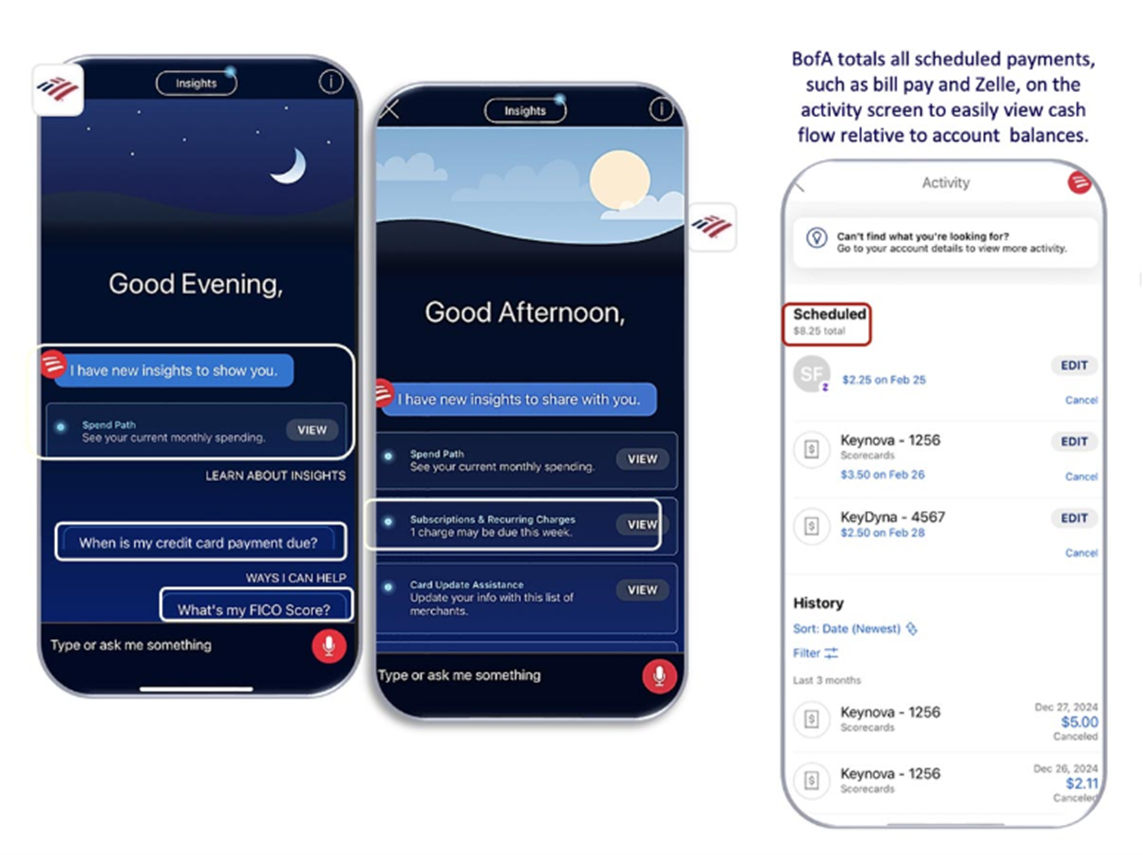
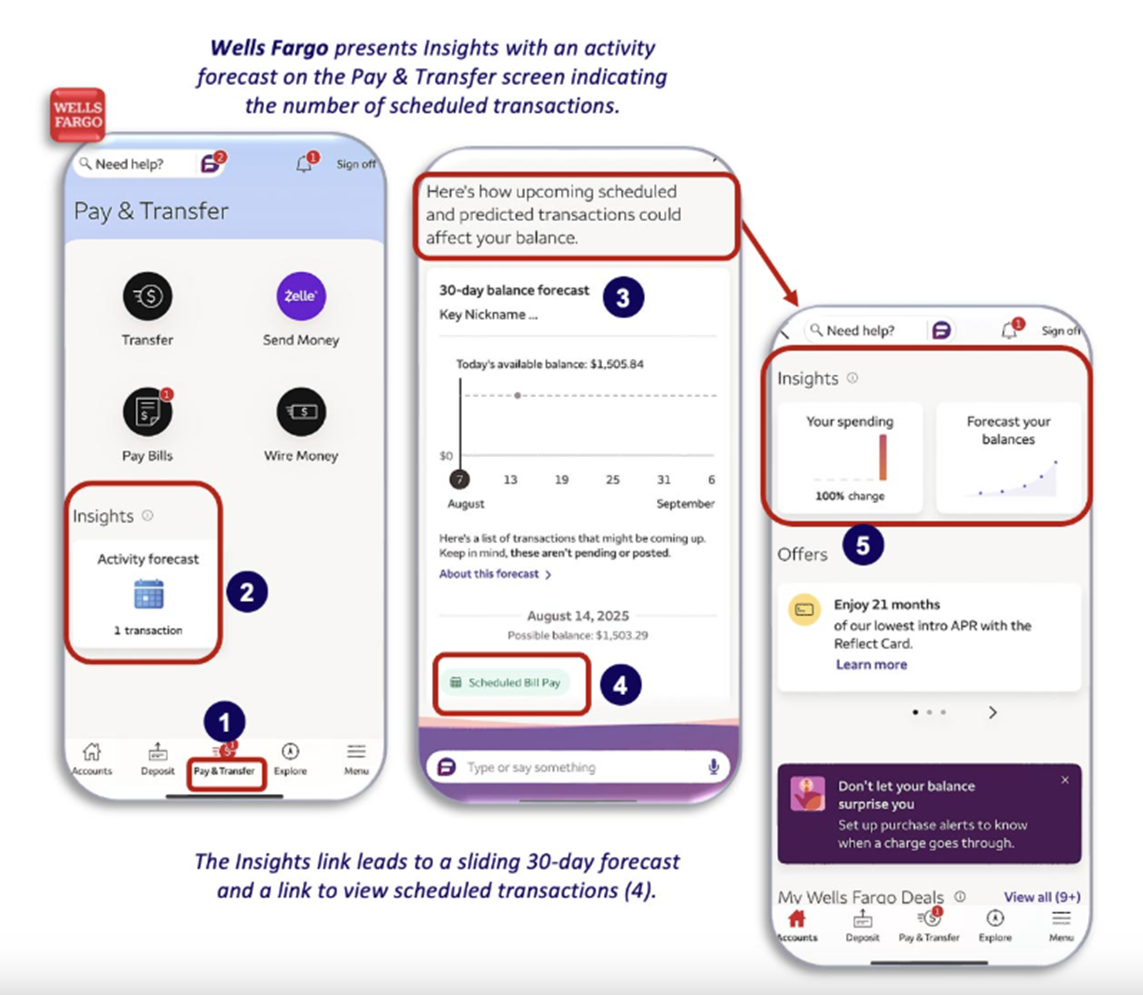
What are the top banking apps doing best?At Bank of America, which Keynova’s Mobile Banking Scorecard puts in first place among small-business bankers, a virtual assistant called “Erica” presents a summary page after a customer logs into the app. The client gets an immediate overview, including categorized spending, the previous year’s cash flow, recurring charges, and payment due dates. image.png604.17 KB Source: Keynova Group via Financial BrandWells Fargo’s app provides users with a hub of actions and insights within its app, like in the “Pay & Transfer” screen. From there, users can view a forecast of their cash flow, see a predicted lineup of revenue and expenditures for a set timeline, and see what their balance will be at a certain point, based on those transactions. image.png647.7 KB Source: Keynova Group via Financial BrandMobile banking apps are increasingly how business customers interact with their financial institutions, and banks with strong apps have competitive advantages. It’s crucial that a mobile banking app be a reliable source for financial information, offer helpful notifications and alerts at the right time, and function as a customer service starting point. If you can pack these crucial capabilities into your mobile banking app, you’ll build a better rapport with your customers and might even become an indispensable source of financial insights.
How CFIs Can Plan For a Less Predictable Environment Several independent forces are converging to make 2026 planning assumptions less reliable than they've been in years. We look at three of these forces and suggest practical steps CFIs can take now to prepare for a range of different outcomes.
Succession Planning as a Strategic Advantage for CFIs Bank Director's 2026 Compensation & Talent Survey reveals that just 9% of CFIs have a CEO succession plan and timeline in place. We explore the survey's findings and what CFIs can do to strengthen their succession planning.
This website uses cookies to provide a personalized, informative web experience,
and to support our daily operations with your financial institution.
PCBB does not share or sell your data to other parties.
Please read our Privacy Notice to learn more about the information we collect.