
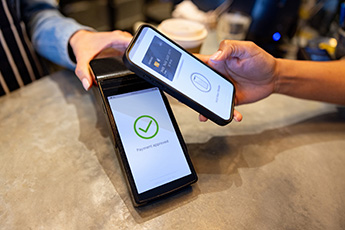
In the old fable of “The Tortoise and The Hare,” the slow and steady tortoise prevails over the swift but arrogant hare. Yet, in today’s high-tech banking world, slow and steady may not be enough to defeat the swifter and more tech-savvy competitor. One case where this is likely true is digital wallets. By 2027, half of all e-commerce transactions will go through digital wallets, as will one-third of point-of-service transactions. Why? Convenience is king, and it’s infinitely easier to pay with a phone that’s already in your hand than to dig around a pocket or purse for a wallet, then pull out a card.The challenge for community financial institutions (CFIs) is to get their own cards into a customer’s digital wallet before someone else does. Once a payment card is in the top position in a digital wallet, a customer is less likely to change the card’s spot. CFIs that proceed slowly and cautiously can find themselves losing the race to more nimble providers who gain top-of-wallet positions first. The Value of Digital Wallet Space for CFIsInstitutions that gain top-of-wallet positions will have their cards participating in more customer transactions. That translates not only to more transactional income but also to closer relationships with customers. CFIs can use that data to gain insights into customer behaviors, creating more opportunities to engage and perhaps enhance relationships.It is also important to note that when customers engage with other providers like fintechs for their digital wallets, the banking relationship can be diminished. “It’s a lost opportunity for banks to optimize their portfolios and improve interchange income if customers are not using the bank card in their digital wallets,” says Nick Denning, head of product and strategy at ICBA Payments.CFIs Courting Digital Wallet BusinessMany CFIs already do recognize the importance of having a robust digital wallet strategy and have a game plan for courting digital wallet use by customers. Leveraging websites to promote digital wallet use is common. Here are some examples:
- Community Bank in Longview, Texas has a pitch on its website that extols the virtues of digital wallets, describes how they work, and gives a simple, three-step instruction guide on how customers can get one and link it to their accounts with the bank.
- Community West Bank of Fresno, California has a more extensive pitch for why customers would want to link their accounts to digital wallets and how to set them up, complete with clickable links to three major digital wallet providers.
- Legacy Bank in Wichita, Kansas eases into promoting its own cards for digital wallets with a web page on its site that provides an extensive overview of what digital wallets are, the benefits of using them, and how they work. The site then offers step-by-step instructions on how to add a Legacy Bank card to various digital wallet platforms.
Incentives for Digital WalletsCompetition for top-of-wallet status is intense, and many institutions now use targeted incentives to help their cards earn more digital wallet activity. The most effective approaches focus on activation, ongoing use, and sustained engagement. Examples include:
- Cash back. A modest but visible cash back offer on transactions can help customers build the habit of using a CFI’s card on their phone instead of a physical card.
- Promotions. Using customer data analytics, CFIs can incentivize customers to add their card to a digital wallet to receive a special promotion for a banking product, a coupon for a local business, or another perk.
- Top-of-wallet rewards. Some institutions offer incentives when customers make the CFI’s card their default option in a digital wallet. These rewards can be tied to a certain number of digital wallet purchases within a set period, which helps reinforce the behavior.
- Referral bonuses. A friend-and-family bonus can increase awareness and help CFIs tap into word-of-mouth marketing as customers share their experience adding the card to a digital wallet.
A thoughtful digital wallet strategy can help CFIs stay visible as customer payment habits shift. Encouraging customers to add and use a CFI’s card on their phone strengthens engagement, supports interchange income, and keeps the relationship centered on the institution. With usage rising quickly, now is the time for CFIs to secure their place in the customer’s digital wallet.