
Key Insights
- The holiday shopping surge provides an ideal live stress test for evaluating fraud rules and operational resilience.
- Fraud controls should balance proactive risk mitigation with minimizing false positives during peak consumer purchasing volume.
- Proactively assisting merchant customers with system capacity and cash flow planning mitigates chargebacks and payment disruptions.
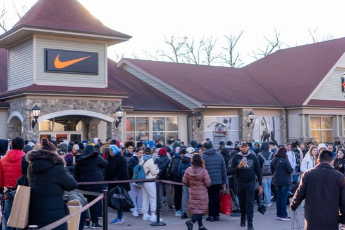
The term “Black Friday” was first used to describe the Friday after Thanksgiving by Philadelphia police officers in the 1950s to describe heavy crowds and traffic jams that occurred on this day. Retailers adopted the term in the late 1980s to describe the day when stores moved from a loss (in the red) to a profit (in the black). Black Friday has now morphed into a five-day weekend that also includes Small Business Saturday and Cyber Monday.
A record 202.9 million consumers shopped during the Black Friday weekend in 2025. This year, retail sales during this period are projected to top $85B, up 8.75% from last year.
This concentrated activity can present a number of challenges for community financial institutions (CFIs), including heavier card volume, more fraud alerts and card declines, increased disputes, and greater pressure on call centers and digital channels. It can also affect commercial customers through unusually high transaction volumes, cash-flow crunches and more chargebacks and fraud attempts.
Using the Holiday Surge To Assess Readiness
The holiday shopping surge could be an opportunity for CFIs to stress test their fraud controls and operational readiness. As Black Friday approaches, institutions can look beyond traditional customer fraud warnings and consider a broader question: How well are we prepared to protect customers, support merchants, and maintain service during periods of increased transaction activity?
By examining their fraud controls, operational capacity, and business customer needs, CFIs can identify potential vulnerabilities before the holiday rush and use lessons from the season to strengthen year-round operations. This is especially timely given that the FTC received 3 million consumer fraud reports involving $15.9B in losses in 2025.
Three Questions to Stress Test During Holiday Shopping Surge
These three questions can help CFIs evaluate their preparedness for the holiday shopping surge and identify areas that may warrant closer attention.
1. Can We Distinguish a Volume Surge from a Fraud Threat?
In other words, can you tell the difference between legitimate changes in consumer behavior and actual card fraud without creating unnecessary friction? Answering this question requires a thorough understanding of credit and debit card fraud rules. The algorithms used by credit and debit card companies to flag or decline suspicious card transactions look for abnormal consumer behavior. These include:
- Velocity checks, which flag sudden increases in transaction frequency or value over a short period.
- Geographic checks, which identify transactions occurring in distant locations within an unusually short time.
- Micro-transaction tests, which flag accounts if there is a rapid series of very small transactions (typically under one dollar) since this could be a sign that a fraudster is testing to see if a stolen card is active.
While these controls help detect potentially fraudulent activity, they can also generate false positives when legitimate holiday purchases trigger fraud alerts or declines.
CFIs can use the holiday shopping surge to evaluate how effectively these controls are working. Are fraud alerts increasing disproportionately to transaction volume? Are legitimate customers experiencing more declined transactions? Are certain fraud rules generating an unusual number of false positives?
Reviewing these patterns with internal fraud teams and processing partners can help CFIs identify opportunities to refine their controls while maintaining a balance between fraud prevention and customer convenience.
2. How Well Can We Hold Up Under Volume?
The surge in card activity during Black Friday weekend could put a serious strain on your CFI’s systems and operations. This includes your core platform, call centers, digital channels and external vendors.
Take a close look at your escalation coverage, including how fast you can change a fraud rule during the peak of holiday shopping (especially during Black Friday weekend) and whether those changes require coordination with third-party providers. What kinds of support tiers and compliance protocols are available to handle complex payment anomalies that can’t be resolved via standard customer service channels? Consider how financial and fee disputes, risk and fraud escalation, and how technical failures and outages (e.g., API gateway failures, terminal batch settlement errors) are handled.
3. Are Our Merchant Customers Ready for the Surge?
The holiday surge will likely have a big impact on your merchant customers, from heavy spikes in card volume to increased chargebacks and higher fraud risk. Now is a goodtime to help them prepare.
CFIs could consider assisting their business customers, particularly those expecting significant seasonal sales increases. Looking at sales patterns from previous holiday seasons, including peak shipping days and times and average ticket sizes, can help merchants anticipate demand and determine whether their processing capacity is sufficient.
CFIs could also encourage merchants to work with their payment processing providers to test their systems before Black Friday weekend arrives, including terminals, contactless payments, online checkout processes, and integration between POS systems and inventory. Merchants should also have a backup plan in case of a power outage or lost internet connection.
Merchants may also experience cash flow challenges during the holiday surge. CFIs can help them prepare by reviewing deposit schedules together so they understand payment settlement timelines and can plan their cash flow needs accordingly.
The expected surge in card volume over the Black Friday weekend presents a valuable opportunity to stress test your institution’s fraud controls, operational readiness, and ability to support business customers. By examining how well these areas perform under pressure, institutions can identify potential weaknesses and make improvements that strengthen their operations and customer relationships well beyond the holiday shopping season.