

Key Insights
- Natural disasters cause 40% of small businesses to close, with 90% never reopening.
- Community financial institutions that educate small- to medium-sized businesses about disaster preparedness can reduce lending portfolio risk and strengthen trust.
- Key preparedness areas include capital reserves, data backup, insurance reviews, and federal relief guidance.
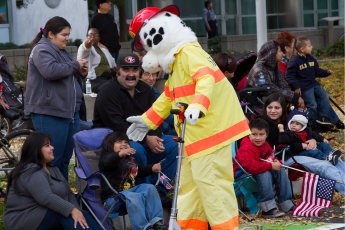
In 1951, the National Fire Protection Association introduced Sparky the Fire Dog as its official mascot to teach children about fire safety. For 75 years, Sparky has been teaching kids about the dangers of fire, as well safety protocols such as the “stop, drop and roll” technique that can be used to exterminate a fire on an individual’s clothing.
Sparky’s creation came about at a time when childhood mortality due to fires was extremely high. Though there is no specific data detailing how many lives he has helped save, Sparky’s survival tips, along with technological improvements, have helped to significantly reduce the number of children that die in fires. Sparky's enduring legacy is proof that education and preparation save lives. That same principle can be applied to natural disaster preparedness. September being National Preparedness Month creates an opportunity for community financial institutions (CFIs) to help educate small and midsized businesses (SMBs) about disaster planning.
Sparky’s creation came about at a time when childhood mortality due to fires was extremely high. Though there is no specific data detailing how many lives he has helped save, Sparky’s survival tips, along with technological improvements, have helped to significantly reduce the number of children that die in fires. Sparky's enduring legacy is proof that education and preparation save lives. That same principle can be applied to natural disaster preparedness. September being National Preparedness Month creates an opportunity for community financial institutions (CFIs) to help educate small and midsized businesses (SMBs) about disaster planning.
How Natural Disasters Can Affect SMBs
Natural disasters can be damaging for any business, but for an overwhelming number of SMBs, they can mean an abrupt and unexpected closure. According to the Federal Emergency Management Agency (FEMA), 40% of small businesses shut down after being hit by natural disasters, with another 25% failing within one year. The Small Business Administration (SBA) estimates that close to 90% of small businesses hit with disasters never reopen.
Businesses that do manage to keep operating after natural disasters often struggle with cash flow issues, extreme property damage, and the loss of key data such as customer information. Educating SMBs about disaster planning and steps they can take to prepare themselves for worst case scenarios not only can help CFIs improve the odds of such customers surviving natural disasters, but can also position banks as trusted long-term advisors.
Businesses that do manage to keep operating after natural disasters often struggle with cash flow issues, extreme property damage, and the loss of key data such as customer information. Educating SMBs about disaster planning and steps they can take to prepare themselves for worst case scenarios not only can help CFIs improve the odds of such customers surviving natural disasters, but can also position banks as trusted long-term advisors.
The Mutual Benefits of Disaster Preparation
Educating SMBs about disaster preparedness can be as beneficial for CFIs as it can be for small businesses themselves. If SMBs can continue to operate following a natural disaster and have taken preventive measures to minimize damages, it can reduce the risk of customers defaulting on a loan or having to close their accounts because they have to close up shop. Providing strategic guidance to businesses can also help CFIs contribute to the overall community’s success by helping to preserve jobs and protect the local tax base.
Fortunately for CFIs, there is no shortage of materials to pull from to help educate SMBs about disaster preparedness, with readily available resources, such as Ready.gov, providing materials that can be co-branded ranging from how-to guides to toolkits that can be used to help design localized emergency protocols for SMBs. CFIs could also consider holding in-person workshops and creating materials and checklists tailored to the natural disasters most likely to impact businesses within their specific geographic regions.
Fortunately for CFIs, there is no shortage of materials to pull from to help educate SMBs about disaster preparedness, with readily available resources, such as Ready.gov, providing materials that can be co-branded ranging from how-to guides to toolkits that can be used to help design localized emergency protocols for SMBs. CFIs could also consider holding in-person workshops and creating materials and checklists tailored to the natural disasters most likely to impact businesses within their specific geographic regions.
Following are some of the key items CFIs should consider focusing on when putting together educational materials about disaster preparedness for SMBs:
- Capital resilience. Educate SMBs about the importance of proactively building up cash reserves that can be used in the event of an emergency, as well as the benefits of establishing a business line of credit during under non-emergency economic conditions.
- Backup data. Inform SMB customers about the importance of electronically backing up key data in the cloud, from customer information to accounts receivable, payroll information, and tax documentation.
- Physical preparation for disasters. Help SMBs create checklists unique to their business and the area where they operate that can be used to physically prepare for the types of natural disasters that they are most likely to experience. For example, CFIs with SMB customers in coastal states, such as Florida, can provide checklists of the steps that businesses should take to physically prepare their buildings when a hurricane is approaching so they can best protect their inventory and know how to communicate and coordinate with employees.
- Insurance. Help SMBs understand the limits to their insurance coverage and where additional coverage may be necessary, especially since commercial property policies typically exclude natural disasters, such as flooding and earthquake damage. Similarly, in areas prone to wildfires, such as California, insurers may have additional maintenance requirements that could impact coverage, such as brush clearance and even fire-safe construction requirements. CFIs should encourage SMBs to perform annual insurance audits and to take measures, such as digital inventories of their physical assets, including timestamped photos, and have proof of purchase for valuable equipment or goods that would be necessary for filing a claim in the event that a business is heavily damaged or destroyed.
- Guidelines for accessing federal relief. Teach SMBs about federal resources and disaster relief programs available within the state they operate in, such as state-level grants, local emergency funding sources, and tax deferrals available. Provide materials that simplify the application process for federal resources, such as SBA disaster loans.
As discussed in Part One of this series, CFIs should also prepare themselves so that they are best positioned to also provide assistance to SMBs following disasters. If SMBs are forced to close for an extended period of time, CFIs should be ready to provide flexibility to borrowers, when possible, or to modify loan terms, reduce interest rates or waive fees. While such offers will be contingent upon individual circumstances, having general guidelines in place for different types of potential natural disasters and scenarios can be helpful if such situations arise.
Taking the time to educate SMBs about the importance of planning for natural disasters and proactively taking steps to minimize potential damage can be as beneficial for CFIs as it can be for small businesses. If preparing for natural disasters can help SMBs better weather worst case scenarios it minimizes the risk that they will be lost as customers and will strengthen their trust and confidence in their financial institution.
Taking the time to educate SMBs about the importance of planning for natural disasters and proactively taking steps to minimize potential damage can be as beneficial for CFIs as it can be for small businesses. If preparing for natural disasters can help SMBs better weather worst case scenarios it minimizes the risk that they will be lost as customers and will strengthen their trust and confidence in their financial institution.