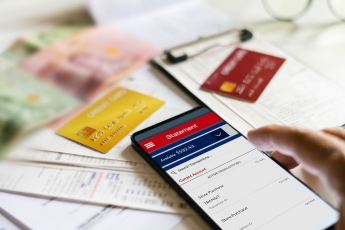


Historically, payment methods have looked quite different in various parts of the world, depending on what that society valued the most and what was considered currency. During the Roman Empire, for instance, soldiers in the Roman army were sometimes paid in salt, since it was so valuable for preserving food. They called this monthly allowance “salarium,” where “sal” means salt in Latin. Salarium eventually morphed into the English word salary.
Although payment methods are generally more homogenous, the payment method type can make a big difference for how soon small businesses get paid.
In the age of fast digital payments, small businesses still rely extensively on the slowest payment method: paper checks. About 40% of smaller businesses still get paid by check. While checks remain common, the delays associated with paper-based payments can create cash flow and operational challenges for businesses.
The hang up revolves around the “last mile” of payments, the point at which the payment amount is actually deposited in the small business account. Digital payments speed money along, but checks travel a slow and methodical route that is ill suited for today’s payments landscape. Your small business customers are not necessarily relying on check payments out of habit – they may not even be aware of the payment solutions that could help their businesses thrive, or how easy it is to implement them with the help of their CFI.
The modernization gap between sender and recipient
Even though small businesses are responsible for 55% of the net total number of US jobs created, many small and medium-sized businesses (SMBs) continue to rely on payment processes that can slow access to funds and create operational inefficiencies.
There are certainly businesses that still prefer checks because they are familiar and well established within existing workflows. In other cases, businesses may not be taking full advantage of the payment options available to them. Regardless of how a check is generated, paper-based payments often introduce delays, additional handling, manual reconciliation, and slower access to funds. These challenges can affect cash flow, increase administrative burden, and make it harder for businesses to operate efficiently.
The length of the last mile
The last mile for check processing presents a host of challenges for both small businesses and their CFIs. The following complications have some of the biggest impact on the health of a small business:
- Payment delays. Physical checks may not get deposited right away or may take longer to clear than usual, and without those settled funds accessible, SMBs can run the risk of lacking the funds to pay their employees on time, order supplies, and keep operations running smoothly.
- Manual overhead. SMBs rely on staff to track payments and order, which increases the risk for human error and adds unnecessary accounting complexity.
- Fraud risk. Check fraud is still common, and because it’s a payment method that lacks the kind of enhanced security available to digital forms of payment, it can be harder for businesses for recover from the financial losses of check fraud.
- Duplicated and insufficient funds. The last mile can stretch even further if a check is accidentally duplicated, or the check is returned due to insufficient funds. The time and effort involved in researching and correcting check errors, as well as the money lost from chargeback fees, adds to the manual and financial burden your SMB customers are shouldering.
Helping SMBs broaden their payment capabilities
Fortunately for SMBs, their CFIs can step in with the assist.
There are certainly businesses that prefer checks because they are familiar, widely accepted, and fit well within existing workflows. At the same time, many businesses now have access to a growing range of payment options that can complement traditional payment methods. Understanding when alternative payment solutions may be appropriate can help businesses improve cash flow, reduce manual processing, and provide customers with greater flexibility.
Not only can these additional payment options help SMB customers expand their payment offerings, reduce fraud risk, decrease operational overhead, and improve cash flow, but they can also strengthen the banking relationship and provide opportunities for CFIs to deliver additional value-added services.
Incorporating additional payment solutions can help SMB customers broaden the ways they send and receive payments while addressing specific operational and cash flow challenges. Work with your SMB customers to understand what digital payment methods would be the best fit for their business.
The following are some of the fastest, most convenient payment solutions that SMBs can incorporate to close the digital gap and shorten that last mile:
- Credit and debit cards. Credit and debit card payments are processed quickly, they simplify accounting and invoicing, and they increase cash flow due to the sheer number of customers who rely on card payments to make purchases. Your SMB can also choose how they would like to accept card payments. For instance, a food truck or a popup shop might find a mobile card reader efficient and easy-to-use for accepting contactless card payments.
- Digital wallets and mobile payment apps. These methods are now used for purchases by 60% of the world population. Considering that digital and mobile wallet payments are processed almost instantly, incorporating these payment methods would reduce chargebacks and payment delays, enhance fraud protection, and improve conversion rates, since digital and mobile wallets are widely used.
- ACH transfers and wires. ACH payments can take one to three days to settle, while same-day ACH is available for time‑sensitive transactions, and this payment method is generally very secure. Wires remain critical for high‑value domestic payments and cross‑border transactions, giving SMBs a reliable option when they need same‑day settlement or are paying international suppliers. These rails are typically best for large, one-time transactions or B2B transfers, especially where counterparties expect ACH or wire as the standard.
- Phone and online payment services. For customers that want to pay over the phone, or if your SMB wants the ability to process card payments without setting up an entire POS system, virtual terminals provide a way for businesses to accept card-not-present payments and further expand their payment offerings to customers.
- Instant payments. Real-time payment rails such as RTP and the FedNow Service allow funds to move and settle within seconds, 24/7/365, which can be especially valuable for time‑sensitive B2B payments, emergency payroll, and just‑in‑time supplier payments. Helping SMBs adopt instant payments can significantly reduce payment delays, improve liquidity, and give business owners clearer, up‑to‑the‑minute visibility into their cash flow.
Tackling the last mile in payment processing can help small businesses shave days or weeks off payment processing times, which can aid in cash flow management. Your CFI can play a pivotal role in advising SMBs to help them modernize their payment offerings and expand their customer base with more flexible payment options.