

Congress first gave federal disaster relief in 1803, after a fire in Portsmouth, New Hampshire destroyed much of the city’s seaport, resulting in a blow to the burgeoning nation’s commerce. Congress suspended the city’s bond payments for several months to give it time to rebuild its port. Federal disaster aid continued over the years and was institutionalized in 1979 by the creation of the Federal Emergency Management Agency.It seems there’s another development available now to help expedite emergency aid. The FedNow Service® has now added the ability for federal disaster relief disbursements to financial institutions for customers impacted by wildfires, hurricanes, tornadoes, and other calamities to its growing roster of capabilities. The addition is the latest US Treasury government payment that can be made via the FedNow Service, as part of the Treasury Department’s Bureau of the Fiscal Service’s Digital Pay program that disburses and collects money on behalf of the US government and federal agencies.FedNow Service’s Momentum BuildsSince the FedNow Service went live in July 2023, adoption has steadily grown. Today, more than 1.5K financial institutions participate. More than 2.5MM payments were settled in the third quarter this year, and the average daily volume of settled payments was 27,239 — compared to just a daily average of 75 transactions in the first quarter of its launch. In line with this growth, the service has raised its limit for a single transaction to $10MM. As use cases expand and limits increase, so does the payment rail’s relevance. Benefits of Instant Disaster Relief DisbursementsWith natural disasters as prevalent as ever and costs of rebuilding increasing, some insurance companies have bowed out of renewing or writing policies in high-risk areas like California and Florida or increased deductibles and premiums to become unaffordable for property owners. When a disaster strikes these areas, property owners with high-deductible policies are left in a sticky situation — drain their savings to get the repairs done and avoid extended business closures and rental stays or risk massive insurance premium increases by making a claim. This leaves a growing need for more emergency funding in those areas when natural disasters leave destruction in their wake.The ability to immediately receive federal agency disbursements will be a game-changer for individuals and businesses that need funds to more quickly recover from disaster or emergency situations, says Mark Gould, chief payments executive for Federal Reserve Financial Services. “It will also be a key differentiator for financial institutions that enable access to these funds through their participation in the FedNow Service.”The FedNow Service can not only greatly expedite the disbursement of emergency funds, but the instant payment rail with its robust capabilities can also enable greater accuracy through real-time account verification and better fraud prevention, says Daniel Aldrich, Dean's professor of resilience at Northeastern University.The first financial institution to take advantage of the new FedNow Service use case was the $2.8B-asset CB&S Bank of Russellville, Alabama. “We were honored to be the first bank to receive an emergency relief payment via the FedNow Service,” says Max Raybon, AAP, ACH/treasury management support manager with CB&S Bank. “We believe these immediate disbursements will have a positive impact on our customers and the community.”Potential FedNow Service Use CasesFinancial institutions and their customers can take advantage of ever-expanding FedNow Service use cases, including instant payroll, auto loan disbursements, digital wallet defunding, real estate transactions, brokerage account defunding, and insurance payouts.“Merchant refunds, account funding, healthcare payments, and small business and online marketplace payments are use cases likely to emerge strongly in the next 12 to 18 months,” says Chief FedNow Executive Nick Stanescu. “But I fully look forward to seeing unexpected use cases, because use cases very often bubble up in unpredictable ways.”If your institution hasn’t yet adopted the FedNow Service for at least receiving payments, now you have even more reasons to take advantage. Instant disaster relief and other government emergency disbursements — not to mention an ever-evolving list of use cases to benefit your customers — are just the latest of many excellent reasons to get your financial institution set up to accept FedNow Service payments.

BID® Daily Newsletter
Jan 8, 2026
BID® Daily Newsletter
Jan 8, 2026
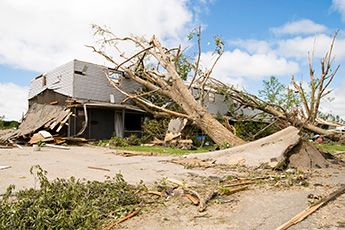
The FedNow Service Expands Use Cases to Disaster Relief
Summary:
The Federal Reserve announced a new use case this fall for the FedNow Service® — instant federal disaster relief. We discuss how CFIs and their customers could benefit from receiving such payments.
Subscribe to the BID Daily Newsletter to have it delivered by email daily.
Related Articles:

Three Global Instant Payment Case Studies for CFIs
Brazil, the euro area, and Australia offer valuable insights on how digital-money projects impact liquidity, customer trust, and partnerships as the US continues to adopt faster payments.
Brazil, the euro area, and Australia offer valuable insights on how digital-money projects impact liquidity, customer trust, and partnerships as the US continues to adopt faster payments.

Keeping Up with Fast-Growing Fast Payments
As demand for faster payments surges, community financial institutions can assess diverse payment rails, conduct operational audits, and evaluate strategic partnerships to meet small business needs while managing evolving risks.
As demand for faster payments surges, community financial institutions can assess diverse payment rails, conduct operational audits, and evaluate strategic partnerships to meet small business needs while managing evolving risks.